
[ Fabric Expansion Joints ]
Flexible Fabric Expansion Joints for Industrial Ducting
Composite connectors built as a system of functional layers, selected for temperature, gas composition, dust loading and movement.
[ 01 / Overview ]
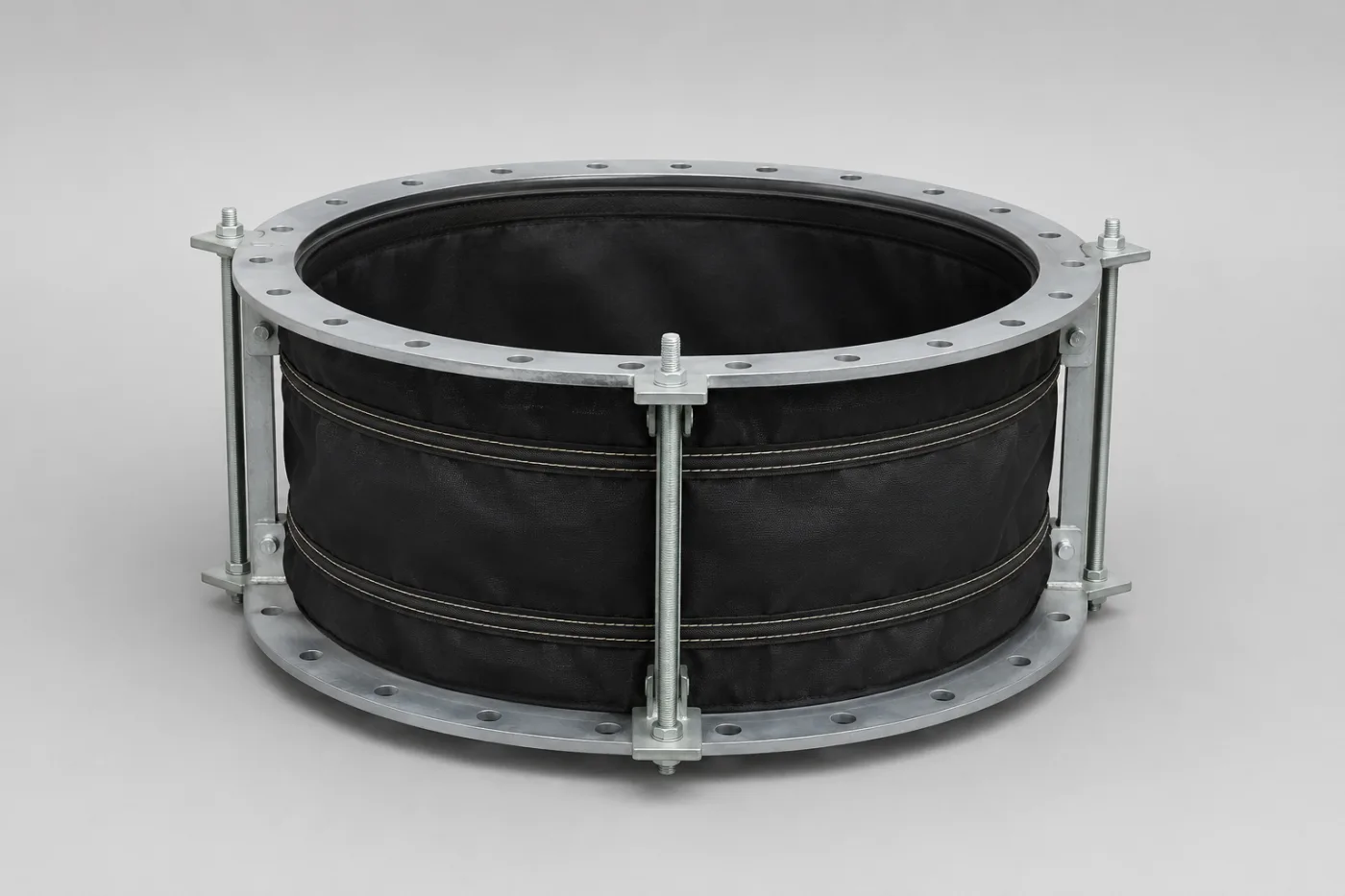
Fabric expansion joints are flexible composite connectors used mainly in air, exhaust and process-gas ducting. Their lightweight construction and low spring force allow them to absorb large axial, lateral and angular movements within a relatively short installation length.
A fabric expansion joint is built as a system of functional layers. The gas seal membrane, insulation, reinforcement, outer cover, internal liner and attachment arrangement are selected according to temperature, pressure, gas composition, dust loading, movement and environmental exposure.
The Layer System
Reading from the duct interior outward. Final temperature and pressure ratings depend on the complete composite, not only the visible outer fabric.
- 01 Internal liner Stainless steel or alloy, for flow, abrasion or temperature protection
- 02 Insulation bolster Controls the temperature reaching the flexible gas-seal layer
- 03 Insulation layers Glass, silica or ceramic for elevated-temperature applications
- 04 Gas seal membrane functional layer The functional barrier. Elastomer-coated or PTFE-coated glass fabric, with reinforcement
- 05 Outer cover Environmental and mechanical protection
- 06 Attachment Clamp bars, bolted flanges or weld-in frames
Key Benefits
- Accommodates large multi-directional movement
- Produces low reaction forces on ducting and connected equipment
- Helps isolate vibration and structure-borne noise
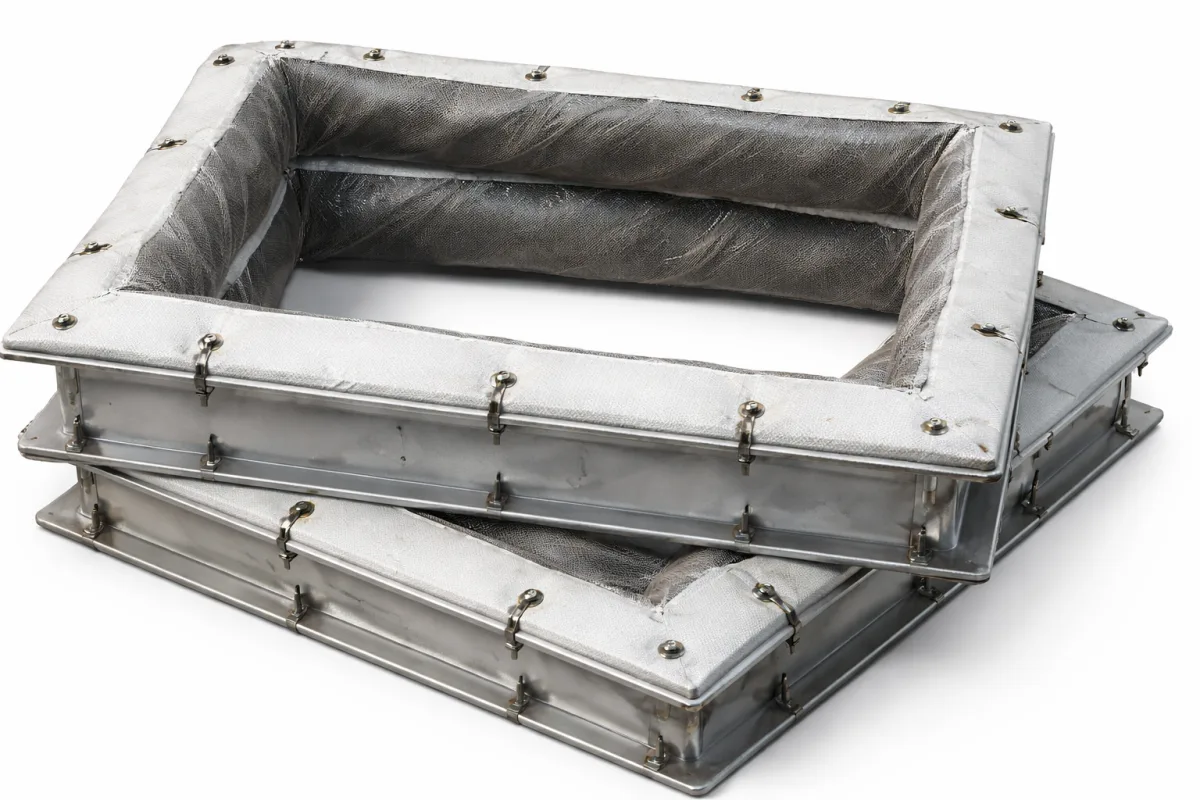
- Suitable for circular, rectangular and transition duct geometry
- Can be supplied as single-layer or engineered multi-layer construction
- Can support pre-assembled, belt-type or project-specific attachment arrangements
Construction Options
- Elastomer-coated fabrics such as EPDM, neoprene, silicone or FKM-based constructions
- PTFE-coated glass fabric for selected chemical and temperature duties
- Glass, silica or ceramic insulation layers for elevated-temperature applications
- Stainless steel or alloy internal liners for flow, abrasion or temperature protection
- Insulation bolsters to control the temperature at the flexible gas-seal layer
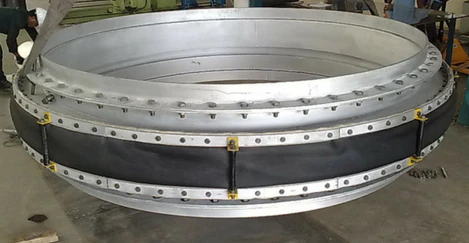
- Clamp bars, bolted flanges, weld-in frames or other project-specific attachments
- Factory-assembled or site-spliced construction where size and access require it
Typical Applications
- Boiler, heater and furnace ducting
- Gas turbine and engine exhaust systems
- Flue gas and emissions-control systems
- Scrubbers, precipitators and filtration equipment
- Fans, blowers and ventilation systems
- Waste-to-energy and incineration plants
- Process air and hot-gas transfer ducting
Design and Quality Framework
Fabric expansion joints are engineered to project service conditions and may be specified with reference to recognised industry guidance for non-metallic ducting expansion joints, applicable material standards and client requirements. Final temperature and pressure ratings depend on the complete composite construction, not only the visible outer fabric.
[ Construction ]
EPDM · Neoprene · Silicone
FKM-based · PTFE / glass
Glass / silica / ceramic
[ Standards Referenced ]
Industry guidance for
non-metallic ducting joints
Material standards
Client requirements
Ratings depend on the complete composite, not the outer fabric alone.
[ Start Here ]
Have a Drawing, Data Sheet or Existing Joint to Replace?
Send us the available technical information, photographs or existing dimensions. We will review the application and advise the next information required for a technical and commercial proposal.
Request a Fabric Expansion Joint Review