
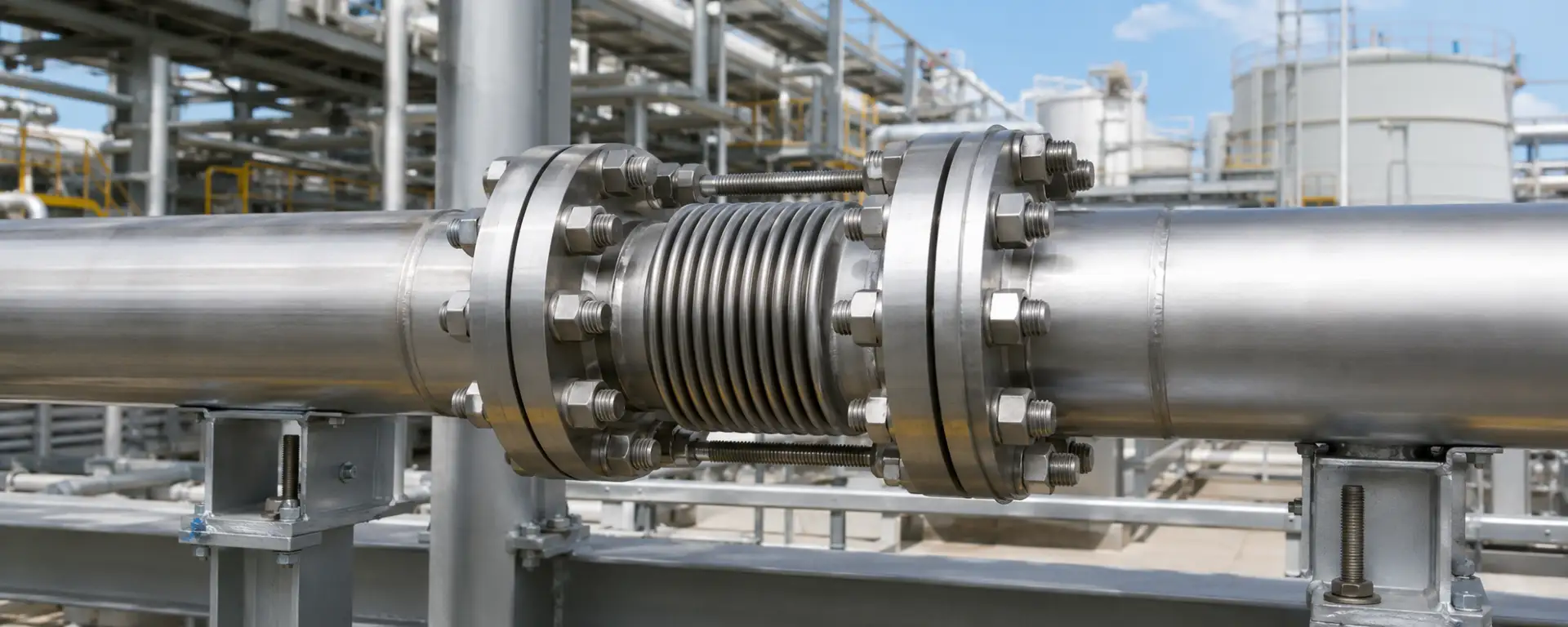
[ Overview ]
Expansion Joint Solutions for Piping and Ducting Systems
Flexible components used to accommodate thermal movement, vibration and other specified displacements while maintaining continuity in a piping or ducting system.
[ 01 / What They Do ]
Expansion joints are flexible components used to accommodate thermal movement, vibration and other specified displacements while maintaining continuity in a piping or ducting system. Selecting the correct technology requires a complete review of operating conditions, movement, pressure thrust, system supports, materials and the required service life.
[ 02 / Selecting a Technology ]
VT Top Engineering supports three principal expansion joint technologies. Each has a different operating envelope and must be selected for the application rather than treated as an interchangeable product.
| Technology | Typical system | Key strength | Typical media |
|---|---|---|---|
| Metal | Pressurised piping, vessels and equipment connections | High temperature and pressure capability; compact engineered bellows | Steam, condensate, process fluids, exhaust and hydrocarbons |
| Fabric | Air and process-gas ducting, generally at low pressure | Large movement, low spring force and lightweight composite construction | Hot air, flue gas, exhaust, ventilation and process gas |
| Rubber | Liquid piping, pumps, chillers, HVAC and utility services | Vibration isolation, noise reduction and multi-directional flexibility | Water, seawater, wastewater, selected chemicals and oils |
[ 03 / Movement Types ]
Three Movements to Specify
Movement is stated per direction, with the operating sequence and the expected number of cycles.
AX / Axial
Compression and extension along the centre line. Requires a properly anchored and guided system.
LAT / Lateral
Offset perpendicular to the centre line. Normally accommodated by a universal arrangement.
ANG / Angular
Rotation about a point. Hinged units act in one plane; gimbal units act in multiple planes.
[ 04 / Information Required ]
Information Required for Selection
- Geometry
- Nominal size, inside and outside dimensions, shape, face-to-face length and overall length.
- Service conditions
- Design and operating pressure, vacuum, temperature, process medium, concentration, solids and abrasives.
- Movement and life
- Required axial, lateral and angular movement, operating sequence and expected number of cycles.
- Connections and materials
- End connections, flange drilling, mating dimensions, preferred materials and corrosion allowance.
- System details
- Anchors, guides, supports, nozzle loads, internal liner, insulation and external protection.
- Quality and reference data
- Inspection, testing, certification, documents, drawings, photographs, nameplate data and sample availability.
[ 05 / Product Pages ]
Specifications by Technology
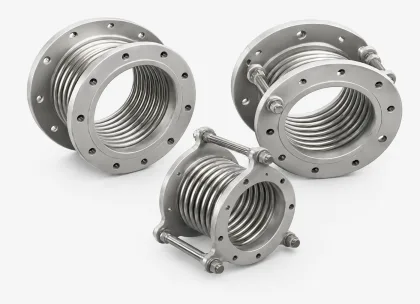
Metal
Pressurised piping, vessels and equipment connections. Six configurations, stainless and nickel alloys.
View Specifications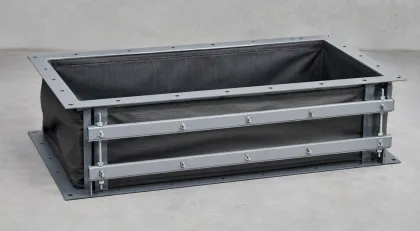
Fabric
Air, exhaust and process-gas ducting at low pressure. Engineered multi-layer composite construction.
View Specifications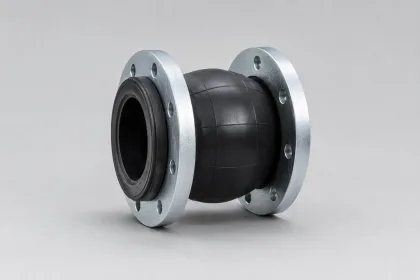
Rubber
Liquid piping, pumps, chillers and utility services. Five elastomers with a selection guide.
View SpecificationsNot sure which applies? Use the joint-type selector on the Industries page.
[ Start Here ]
Have a Drawing, Data Sheet or Existing Joint to Replace?
Send us the available technical information, photographs or existing dimensions. We will review the application and advise the next information required for a technical and commercial proposal.
Start Your Enquiry